Radiant Yacu: “We have come far, but have a long way to go”
Emmanuel Nzanana’s initial reactions were surprise and disbelief. It took a moment to sink in: Radiant Yacu Ltd (hereafter referred to as Radiant Yacu) had just been awarded the European Microfinance Award for 2025. The result marked several firsts: the first time that an organisation from Rwanda had won the Award, the first time a specialised microinsurance provider had won, and the first time that all three finalists - Radiant Yacu, Britam and DHAN Foundation - were members of the Microinsurance Network. As the news began to filter to Emmanuel’s colleagues in Kigali, microinsurance was having its moment in Luxembourg’s autumnal sun.
Box 1: About the European Microfinance Award In 2005, the Luxembourg Ministry of Foreign and European Affairs launched the European Microfinance Award to promote financial inclusion initiatives and highlight their innovative contribution in a particular area. The Award serves two parallel goals: to reward excellence, and collect and disseminate the most relevant practices for others to replicate. “Building Resilience Through Inclusive Insurance” The 2025 European Microfinance Award focused on highlighting organisations that enable low-income and vulnerable people to build resilience and manage risk to inclusive and effective insurance. This year's award outlined the urgent need for structured risk management among these populations, who face numerous economic, health and climate-related challenges. Promoting inclusive insurance helps individuals recover from shocks, build long-term resilience, and achieve sustainable economic security. |
Source: European Microfinance Award website
Why the Award is much more than just an accolade for Radiant Yacu
Once back in Rwanda, Emmanuel Nzanana, his colleague James Gakuru and RADIANT Yacu’s CEO Ovia K. Tuhairwe passionately explained that winning the award is a significant milestone for the company. For them, the prize is an affirmation of their efforts to grow affordable insurance for low-income individuals and vulnerable communities in Rwanda. It will likely enhance Radiant Yacu’s reputation within the country. In turn, this should help to grow new and existing distribution channels, establish new partnerships and, importantly, increase customer trust in insurance.
Through its parent, Radiant Insurance Company, Radiant Yacu’s journey is intertwined with Rwanda’s history. In 1994, in the aftermath of the genocide against the Tutsi, few services functioned. The loss of capital – human and financial – risked making recovery harder. However, resilience is etched into the Rwandan psyche. With support from the state and the international community, the country is seen as a good place to do business in Africa. Its insurance sector has endured a similar trajectory. But with a dedicated microinsurance law, it is seen as an example.
“We are very excited [about the Award]. Even now…a few days later, we are still excited. We plan to keep scaling our products. Our priority is to digitalise them, expand their reach and strengthen our partnerships for impact. We are also looking ahead. We will launch additional solutions to meet the needs of low-income households and farmers. Protection should be accessible, affordable and relevant.” Ovia K. Tuhairwe CEO – Radiant Yacu |
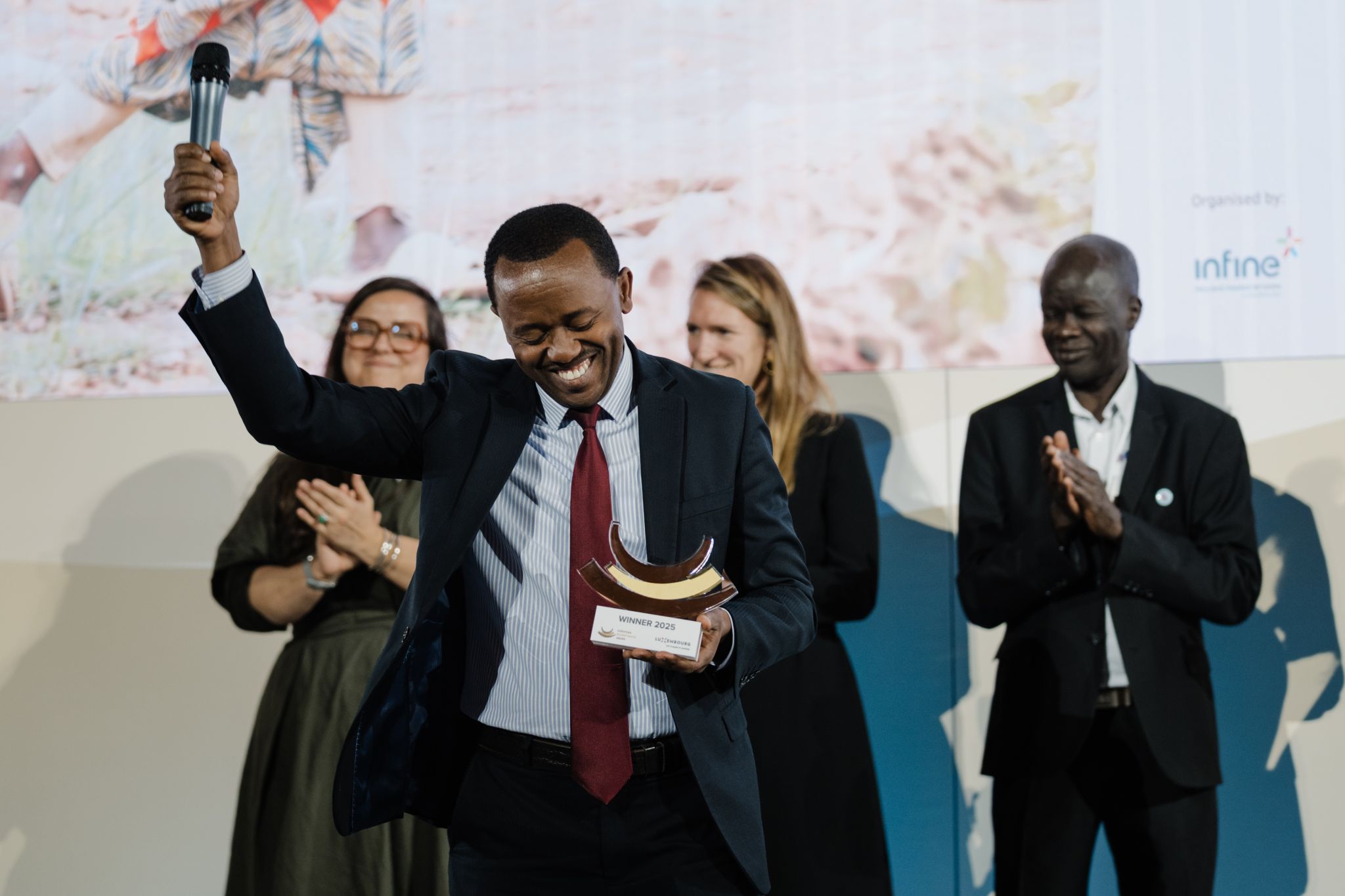
Photo © Inclusive Finance Network Luxembourg / Marion Dessard
Driving factors: Understanding needs, building trust and a supportive environment
Before discussing how the prize money might be used, James explains that there is a need to continue shifting mindsets. Low-income populations, particularly those residing in rural areas, typically believe insurance to be only for the wealthy. Changing this stance remains one of Radiant Yacu’s biggest challenges. But it is also a powerful driving factor: the wide protection gap is what prompted Radiant, an underwriter, to set up a dedicated microinsurance company, to introduce insurance products that are affordable, accessible and customer-centric.
Mistrust is common among users targeted by microinsurance providers. For Radiant Yacu, building trust is central to the company’s mission. So, what has it done to increase customer trust? It builds strong client relationships through communication, especially by organising "claim celebrations" to showcase their commitment and use beneficiaries as testimonials for others. Its products are simple and transparent, and involve fast claim settlements. Radiant Yacu, like many other microinsurance providers, works with a range of partners too. Microfinance institutions and co-operatives embedded in rural communities have helped to take microinsurance to the masses.
“This award means a lot, especially for what we are doing in microinsurance – both nationally and globally. It strengthens our name in the microinsurance industry, and it will help us increase trust among our clients too.” James Gakuru Sales and Marketing Manager – Radiant Yacu |
While Radiant Yacu and other players have sought to understand Rwandans’ needs, it is important to recognise the role played by the Government of Rwanda. The government has prioritised the growth of inclusive insurance through policy, such as its National Financial Inclusion Strategy. It also provides subsidies for the country’s National Agriculture Insurance Scheme (in which Radiant Yacu participates). In addition, the National Bank of Rwanda (the insurance regulator) has created an enabling environment that only a few other countries in Africa have.
Turikumwe: Radiant Yacu’s award-winning insurance cover
Turikumwe, Kinyarwanda for “we are together”, is Radiant Yacu’s flagship insurance product. It covers funeral expenses, healthcare costs and provides income replacement for various low-income households and smallholder farmers. It is designed to help families build resilience and manage expenses incurred due to accidental or natural deaths or hospitalisation. Distribution is via co-operatives, and savings and credit associations. In addition, Radiant Yacu also has a partnership with MTN Rwanda for digital onboarding and payments.
Box 2: Details on Turikumwe Turikumwe is a bundled personal accident and hospital cash for motorcycle riders, tea farmer co-operatives and informal workers. The product includes:
Premiums start at RWF 500 per month (€0.30). Paying RWF 1,000 per month (€0.60) pays RWF 30,000 (€18) for hospital cash, RWF 200,000 (€117) for funeral cover and RWF 1,000,000 (€586) for death or disability. |
Source: Mendelson, S. (2025). Building resilience through inclusive insurance: Insights from the European Microfinance Award 2025
Perhaps what sets Radiant Yacu apart is its claims process. For Ovia, Emmanuel and James, the claims experience is the most important touchpoint for building customer trust. Radiant Yacu is transparent about the documents needed to claim and the expected timeframe customers can expect for responses. Communication is typically in Kinyarwanda, while claims are approved by an automated IT system. Payouts are quickly settled via mobile money, with most claims paid within three working days.
Several microinsurance providers approve and pay claims quickly. But Radiant Yacu’s process involved communicating with empathy. Claims are acknowledged quickly, while customers are kept informed at each stage of the process. Once claims are resolved, customers are surveyed on their satisfaction. This is key for Radiant Yacu: every satisfied customer can potentially bring in many others. Customer feedback is collected through district coordinators, Radiant’s branch network and via WhatsApp. The ground presence has enabled a “phygital” approach, which has worked well for users who lack access to smartphones or the internet.
“Some people consider Radiant a parent due to the help they got when things were bad”
For Ovia, continuously learning from customers is necessary to keep products simple, accessible and affordable. Radiant Yacu does this by co-designing with clients and partners, to understand where customers need help during times of need. This is part of the company’s commitment to improving social protection in Rwanda and the financial impact of resilience on customers, businesses and the economy. This has created a positive image of the company among its customers, which led to a renewal rate of over 80% in 2024.
Many of the lessons learned have emerged through Radiant Yacu’s monitoring work. This includes tracking performance numbers, monitoring claim settlements and collecting customer feedback. Each of these has helped the company to adjust its products, ensuring that they remain viable and relevant. Among these, client testimonies have been particularly useful. Direct feedback from clients has shown evidence of tangible changes. For example, some farmers were able to purchase more agricultural land after receiving claim payouts, while others avoided selling off assets after receiving a claim payout.
“After the Genocide against the Tutsi in 1994, Rwanda had to start again. Since then, we have come a long way. We have come far. But we know we have a long way to go to build our nation and close the risk protection gap. We will do it.” Emmanuel Nzanana Operations Manager – Radiant Yacu |
With the Award in the bag, how does Radiant Yacu plan to use the prize money? Before the team can answer, their bubbling excitement is still there: 2026 stands to be a big year for Radiant Yacu and the Rwandan microinsurance industry. Ovia explains that the funds will be earmarked to grow the adoption of their existing products. Using digital technology is a core part of this objective, as is the need to strengthen new and existing partnerships.
Rwanda is an ambitious country: its insurance association was selected to host the next International Conference on Inclusive Insurance in October 2026. And like Rwanda, Radiant Yacu is ambitious too. Having already introduced parametric insurance for tea, the team has set its sights on launching other new insurance solutions in the near future. Emmanuel, who collected the Award for the company in Luxembourg, agrees. He adds that the funds will help Radiant Yacu to continue what it has been doing well: support community education and awareness efforts to provide a safety net to all.