Full circle: What a year of change means for Rwanda's inclusive insurance moment
Eleven months ago, Emmanuel Nzanana's reaction on a warm, autumnal evening in Luxembourg was disbelief. It took a moment to sink in: Radiant Yacu, a microinsurer from Rwanda where he is the Chief Operating Officer, had just been declared the winner of the Luxembourg Award for Inclusive Finance (formerly the European Microfinance Award), organised by e-MFP and InFiNe. This marked the first time a specialised microinsurance company had won the prestigious award. It also spelt out an important underlying message: Rwanda's approach to inclusive insurance was ready for a global stage.
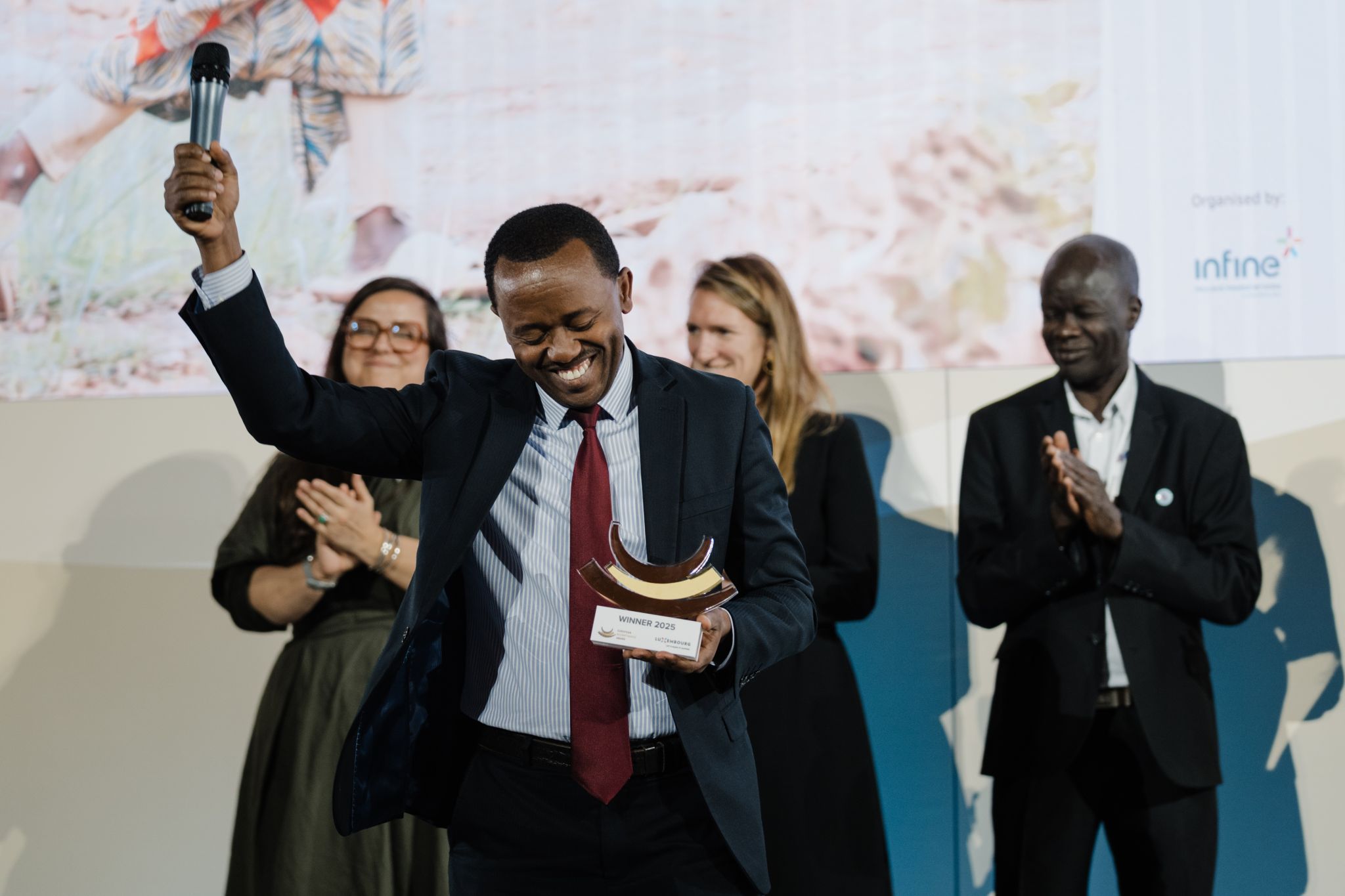
European Microfinance Award (now Luxembourg Award for Inclusive Finance) 2025 Ceremony. Photo © Inclusive Finance Network Luxembourg / Marion Dessard
This year, Rwanda is building that stage itself. From 19 to 23 October, Kigali will play host to the International Conference on Inclusive Insurance (ICII), the sector's annual gathering. Similar to previous incarnations, the event will be put on by local organisations: Ministry of Finance and Economic Planning (MINECOFIN), the National Bank of Rwanda (NBR), Access to Finance Rwanda (AFR), Rwanda Insurers Association (ASSAR), and Rwanda Insurance Brokers Organization (RIBO) in cooperation with Munich Re Foundation and the Microinsurance Network.
This milestone carries great importance for Rwanda. In a sense, it illustrates a full-circle moment: the country that won a significant inclusive insurance prize in 2025 will now host the event that convenes the entire industry. But before Kigali welcomes the sector, it is worth asking what has so far changed for Rwanda’s own award winner, and what the last host city left behind. As with the Olympics, “host-country legacies” are important to understand.
ICII 2025: What Quito left behind
ICII 2025 saw around 430 participants from 47 countries gather in Quito. Ecuador hosted the event on its return to Latin America and the Caribbean. For FEDESEG, Ecuador’s insurance association, and the wider Ecuadorian insurance sector, there was more to deal with than just an engaging agenda. The country’s protection gap stood at 80% in 2018 and had only narrowed to 77% by 2024 – the progress was slow. For Patricio Salas, FEDESEG’s Executive Secretary, the aim was to position inclusive insurance as an appropriate mechanism for closing that gap. And, with it, improving Ecuadorians' quality of life through better risk management.
For Patricio, there was success to celebrate. At the end of the event, representatives from local government, the legislature, regulators and supervisors, the microfinance sector and international organisations held an unprecedented meeting. The result was a joint commitment to an agenda for inclusive insurance in Ecuador. This commitment has since become an enabling pillar of the Ecuador Growth Agenda 2040 led by the national government with support from the Inter-American Development Bank. This is the type of afterlife a conference agenda rarely gets.
Honest reflections from Ecuador
One year later, despite this achievement, Patricio is refreshingly honest about what he could change: more space for practical, participatory workshops to build the skills the sector still needs, and a platform to demonstrate tools, technologies or models that other markets could replicate. But when asked what the event did well, he points to something less complicated. The event brought global experience that became accessible, usable and applicable as Ecuador develops its own inclusive insurance market and policy.
Patricio is pragmatic about the ICII 2025. “There is always room for improvement – that is a rule of life”, he says. From his perspective, there are clearer, conceptual changes emerging. Ecuador's financial inclusion and financial education strategies have existed for years. These were built almost entirely around the work being done by banks and microfinance institutions. Since Quito, insurance is being recognised as an important contributor to financial inclusion in its own right.
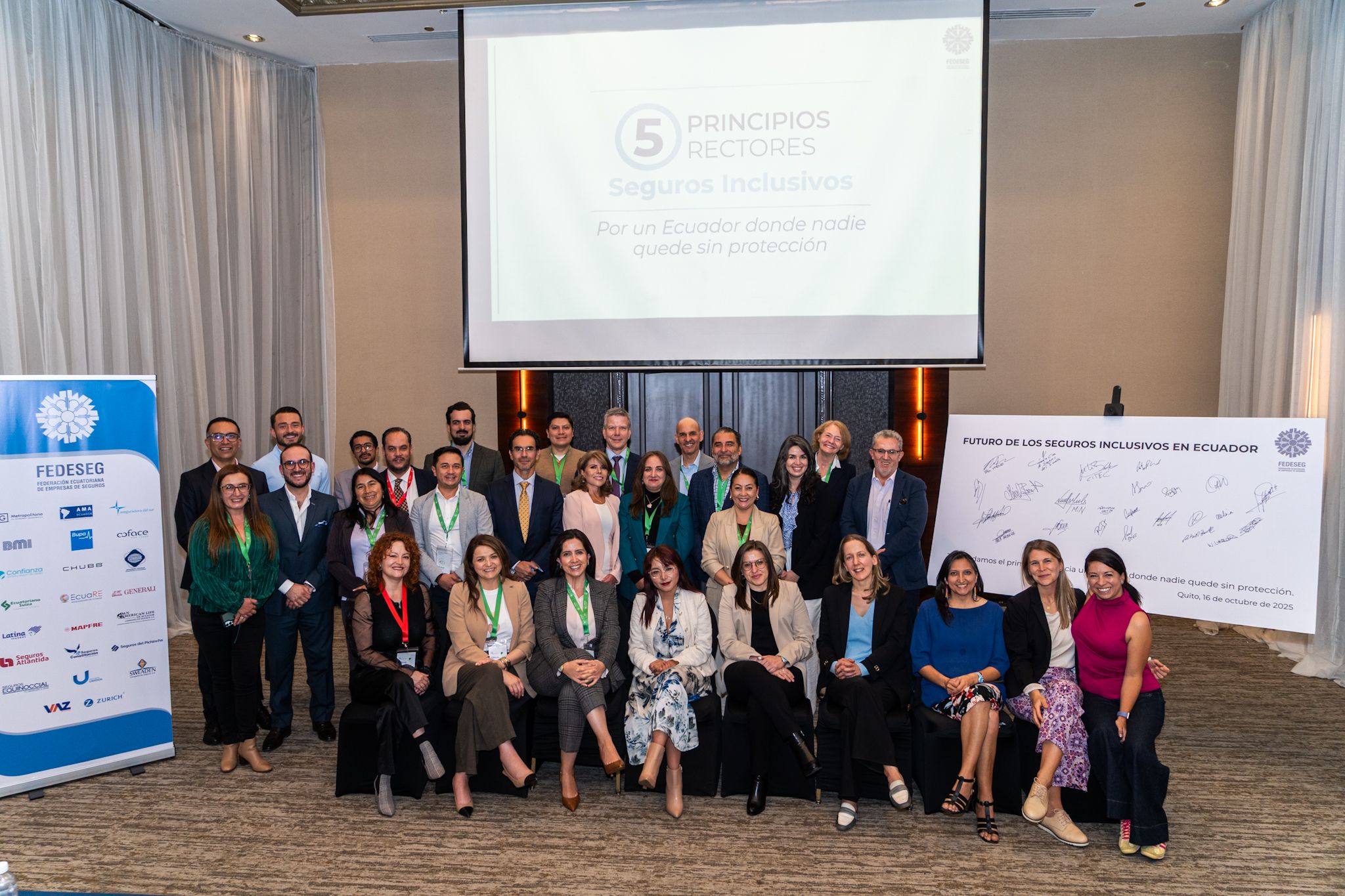
ICII 2025. Photo © Federación Ecuatoriana de Empresas de Seguros (FEDESEG).
Why Kigali and why now
Several good reasons underscore Rwanda hosting this year’s ICII. Its central bank, the National Bank of Rwanda, has built one of the more enabling regulatory environments in Africa. Its National Financial Inclusion Strategy treats insurance as a core element, exemplified by the dedicated microinsurance law only matched by a handful of countries. Attendees will be able to learn more about inclusive insurance in Rwanda on Tuesday 20 October: Plenary 3 will cover the country’s approach to closing its protection gap.
One year on for Radiant Yacu
In December 2025, Ovia K. Tuhairwe, the CEO of Radiant Yacu, stated that the company planned to digitalise its products, expand their reach and strengthen partnerships. When asked what had changed since then, she points out a shift from ambition into implementation. Radiant Yacu has grown distribution networks through banks, microfinance institutions, savings and credit co-operatives and mobile network operators. The aim is to reach people where they already save, borrow, work and transact – rather than asking them to come to it. Digitalisation is a core part of this expansion, across how customers access cover, pay premiums and interact with the company.
Agriculture has remained a particular focus for Radiant Yacu. The company has continued to progress under Rwanda's National Agriculture Insurance Scheme, while exploring parametric insurance for climate-related risks. For Ovia, the goal goes beyond product proliferation: it is more about maintaining relevance. “We are scaling through partnerships, using technology to improve accessibility, and continuing to innovate around…protection gaps”, she says.
While the company and country continue to improve access and the uptake of insurance, Emmanuel Nzanana’s words will ring true for some time. Having collected the Award in Luxembourg last year, he stated: “We have come far. But we know we have a long way to go to build our nation and close the risk protection gap. We will do it." Radiant Yacu continues to move deliberately towards this goal.
What to watch for in Kigali
Beyond Rwanda and the wider region, attendees will learn about several interesting topics. Parallel session 4 on Wednesday 21 October, on AI and tech-enabled microinsurance, will look at how digital tools can lower distribution costs rather than relocating them. On the same day, parallel sessions 6 and 10, on climate and biodiversity risk and on scaling urban flood solutions through public–private action, will focus on climate resilience. On the final day, Plenary 7 will focus on where insurance fails women: a gap that the Microinsurance Network has consistently flagged. Fewer than a fifth of inclusive insurance products are designed with gender dimensions in mind.
A key moment at the ICII takes place every two years, when new data from the Landscape of Microinsurance is released. During Plenary 2 on Tuesday 20 October, expect the Microinsurance Network to offer a preview of the preliminary figures. Kigali will not get the complete dataset; this arrives with the report itself in 2027. But attendees will get a first look at where global coverage, protection gaps and product innovation stand, ahead of everyone else. Perhaps this is a fitting way to open an event that spends the remaining four days looking at what those numbers mean.
The real test is what happens once the curtains come down
Kigali's task is beyond just hosting a successful ICII. It gives Rwanda’s inclusive insurance industry a global platform, just as it did for Quito and Ecuador a year ago, to showcase solutions and ideas. It presents a chance to prove that Radiant Yacu winning the Luxembourg Award for Inclusive Finance was part of a national strategy backing insurance as a core driver of future prosperity and economic growth. The real test will come after the closing remarks: whether that strategy keeps producing insurers like Radiant Yacu long after the delegates have gone home.